
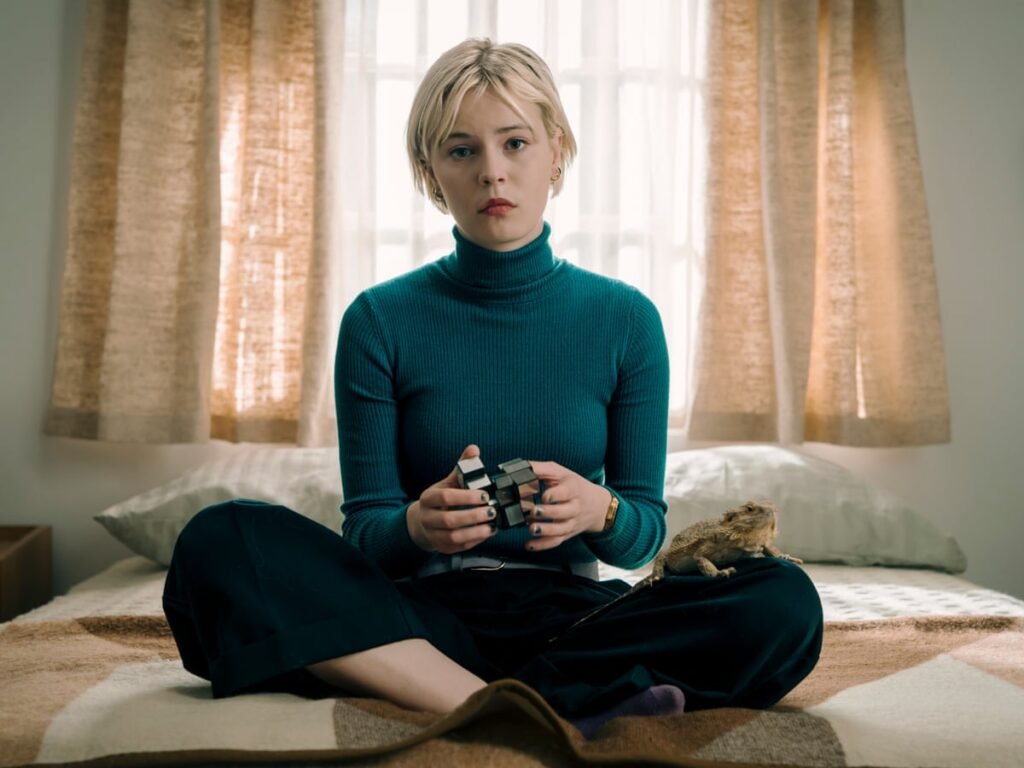
At first, the series felt like “autism 101″—like the advert that wouldn’t let us forget, “Patience is autistic.” Yes, we got it. The overemphasis grated, especially early on. It felt like the show was trying too hard to educate rather than letting the story unfold naturally. But as the series progressed, it became more relaxed, and I found myself connecting with some moments.
One standout was the portrayal of overwhelm and shutdown. There’s a scene where Patience fears being shot, and the noise, anxiety, and panic felt tangible. That moment captured the visceral nature of overwhelm perfectly, something many neurodivergent viewers could identify with.
It also helped that they cast Ella Maisy Purvis, who is AuDHD herself, as the lead. Her authenticity added depth to the character. While I appreciate the effort to hire someone who shares the character’s traits, I still think good writing trumps all. A neurotypical actor can’t save a poorly written script, just as an authentic actor can’t fix tired stereotypes. Unfortunately, the show leaned on some of those stereotypes, like portraying Patience as the “genius” others come to rely on—a trope I’d love to see retired.
The adult autism support group featured in the series had potential, but its representation felt one-dimensional. Neurodivergent experiences are so diverse, yet the group came across as stereotypical and lacked the richness that could’ve made it relatable to a broader audience.
That said, there were relatable moments. For example, Patience’s need to pick a specific table in the canteen mirrored my own habits. As I mentioned in a recent podcast episode, I always choose the same table at a restaurant, and if it’s taken, it genuinely throws me off. Those small, everyday quirks resonated far more than the broader “genius” narrative.
On the whole, while the series had its flaws, it got some things right. It’s not perfect, but it’s a step towards better representation. I’d love to see a show where neurodivergent characters aren’t defined by their diagnosis or reduced to clichés. Just let them navigate life, quirks and all, without making it a spectacle. Until then, I’ll take this as a well-intentioned, if imperfect, effort.